Inspection and Maintenance of Spent Nuclear Fuel Canisters
There are two dry fuel storage systems at the San Onofre Nuclear Generating Station. The original storage system is the Orano TN-NUHOMS system, which is a horizontal storage system. SCE began loading spent nuclear fuel into this system in 2003 and there are 50 canisters located there now.
In 2014, SCE selected Holtec for its expanded dry fuel storage system. The Holtec UMAX system contains 73 canisters of spent nuclear fuel. SCE completed the loading process of this system in August 2020.
Aging Management Programs for Dry Fuel Storage
Dry fuel storage systems are initially licensed for 20 years, and then in 40-year intervals. After the first 20 years, an aging management program (AMP) is required by the Nuclear Regulatory Commission (NRC). This program "evaluates known aging degradation mechanisms to determine if they could affect the ability of dry storage system components to fulfill their safety functions in the 20- to 60-year period of extended operation," according to the NRC. SCE developed an AMP for the TN-NUHOMS system, which is in its post-20-year license renewal period.
More information about that program is available in this white paper produced for the SONGS Community Engagement Panel.
In November 2021, SCE and system manufacturer Orano conducted a baseline inspection for the TN-NUHOMS dry fuel storage system. The inspections found no signs of degradation of the inspected canisters, which had been in storage 17 and 18 years, respectively, at the time of inspection.
See the video below to learn more.
Inspection and Maintenance Program
As part of the process for obtaining a Coastal Development Permit to begin deconstruction of the SONGS site, SCE agreed to an accelerated Inspection and Maintenance Program for the Holtec UMAX storage system. The Coastal Commission approved the IMP in July 2020. It represents the industry’s most advanced and comprehensive spent fuel management program.
The first inspection under this program occurred in 2022. Key elements of the IMP include:
- Periodic canister inspections
- A test canister program (using a canister without spent fuel)<
- Other ongoing inspections of the dry storage system and radiation monitoring
- Response and remediation plans including a demonstrated repair method
- Reporting requirements
The IMP is modeled on NRC requirements for AMPs and guidance from the American Society of Mechanical Engineers (ASME), as well as research by the Electric Power Research Institute (EPRI) and the nuclear industry on MPC performance and potential degradation.
A potential challenge for the long‐term service life of stainless-steel spent fuel canisters is chloride-induced stress corrosion cracking (SCC) initiated on the outer surface of the canisters. Although this type of degradation is highly unlikely for SONGS MPCs, the IMP provides an effective program to monitor, detect, and mitigate any canister surface degradation.
SCE conducted an inspection of the heated test canister in 2022. This canister is similar to the other Holtec canisters except it doesn’t contain any spent nuclear fuel. Electric heating elements simulate the heat that would be produced if it contained fuel. In 2024, SCE inspected the test canister and two canisters containing spent fuel.
The inspections revealed the canisters to be in good overall condition, with minor scratches and scuff marks (from when they were originally stored) that showed no signs of corrosion. The presence of free iron (iron oxide) was also detected. This material was deposited during the transfer of the canisters to storage and did not develop during the storage period.
The next inspection under the IMP will be the test canister in 2027, and then the test canister and two canisters containing spent fuel in 2029.
Watch the video below to learn more about SCE's industry leading effort on canister inspection and repair.
Holtec UMAX System Receives New Covers
The 2024 IMP inspection did reveal indications of wind-driven rain and sediment, or dust, collecting on canister lids. SCE is committed to swiftly addressing maintenance issues to ensure the long-term safe storage and eventual transportation off-site of the canisters.
To minimize the effects of weather on the canisters, SCE installed outlet vent covers on each of the Holtec canister storage locations.
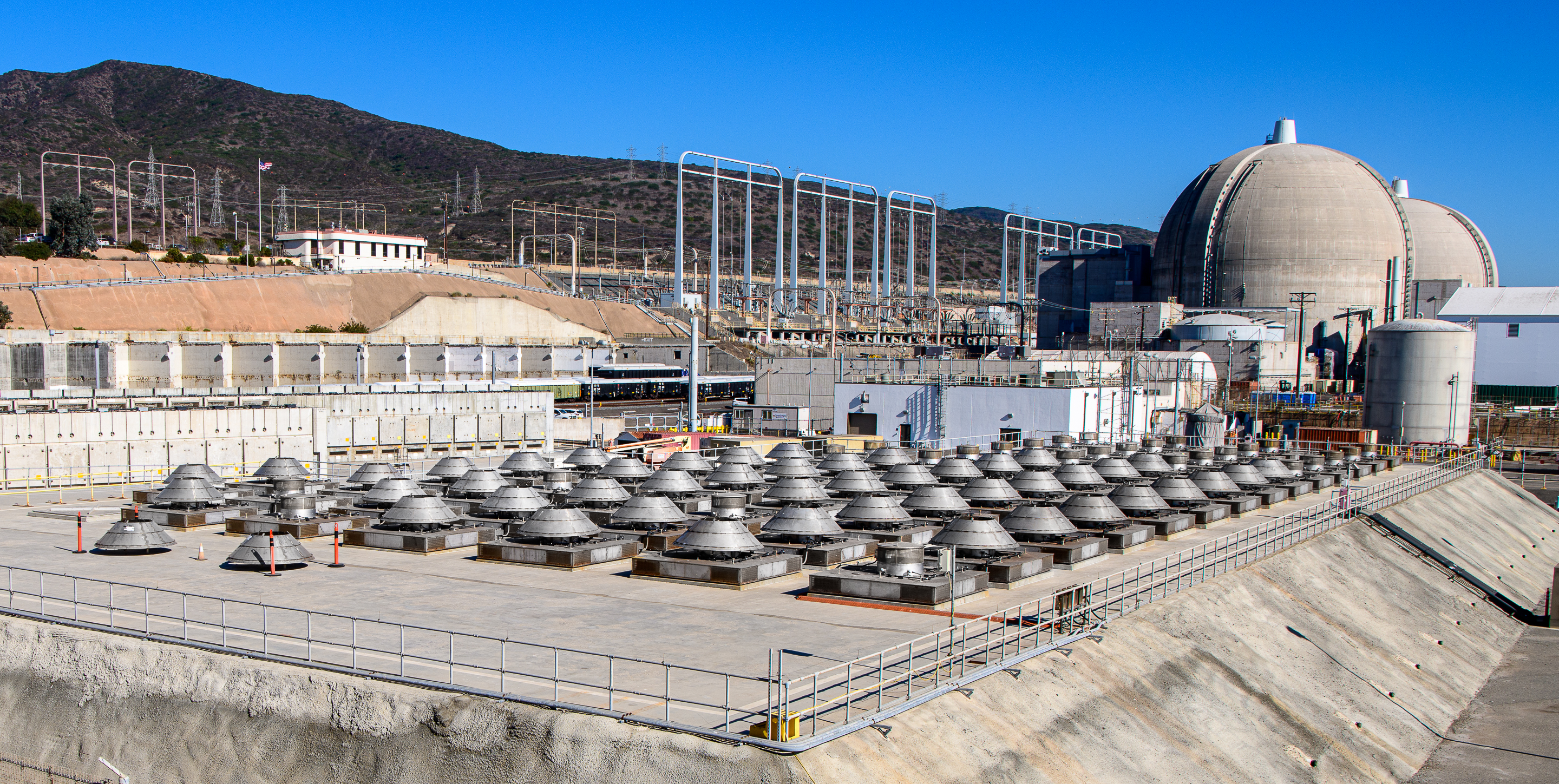
The vent covers are designed and engineered to proactively increase weather resistance to wind driven rain on the system. The covers do not impact air flow.
NRC review was not required prior to installation and the covers were approved by the Coastal Commission as an Immaterial Amendment to the Coastal Development Permit.